
Roast Date vs. Best Before Date for Coffee: What Really Matters
The best-before date is mandatory, but for taste and extraction, the roast date is what counts. Find the ideal freshness window: espresso after 7–21 days, filter coffee after 3–...
Update your country and language to be accurate with the place you're browsing from.
Welcome to SIMON&BEARNS
New look, same great coffee
Free shipping on orders over €66
Welcome to SIMON&BEARNS
New look, same great coffee
Free shipping on orders over €66
Welcome to SIMON&BEARNS
New look, same great coffee
Free shipping on orders over €66
Welcome to SIMON&BEARNS
New look, same great coffee
Free shipping on orders over €66
Welcome to SIMON&BEARNS
New look, same great coffee
Free shipping on orders over €66
Welcome to SIMON&BEARNS
New look, same great coffee
Free shipping on orders over €66
Welcome to SIMON&BEARNS
New look, same great coffee
Free shipping on orders over €66
Welcome to SIMON&BEARNS
New look, same great coffee
Free shipping on orders over €66
Flavor: Milk chocolate, caramel, almond
| Strength: |
|
||
|
|
![]() |
Variety: 100% Arabica, single origin
This coffee is suitable for all preparation methods.
Best suited for:
|
|
|
|
| portafilter |
Stovetop kettle |
Fully automatic |
|
|
|
|
|
| Filter machine / Hand filter |
French Press |
Aeropress |
Cold Brew |
Do you have questions about the correct preparation of your coffee or espresso? Then feel free to send us an email to coffee@simonandbearns.de, contact us via the contact form or speak to us directly in one of our cafés .
Otherwise, here's a quick overview of the different ways to prepare coffee – with links to detailed descriptions. Experiment and discover how wonderfully diverse coffee can be. Enjoy!
Your SIMON&BEARNS Team
Most of you will be familiar with portafilter espresso machines from cafés. Here, finely ground coffee is forced through a fine filter basket using high pressure and water. The goal is to obtain a velvety espresso with a rich crema in an extraction time of 25-30 seconds. The espresso can be enjoyed either straight or with various types of frothed milk. Portafilter machines are also available for home use; as a partner of ECM and Profitec, we would be happy to advise you.
The immersion method gives coffee brewed in a French press a particularly aromatic flavor. Freshly ground coffee is steeped in hot water for about 3 to 5 minutes and then pressed down with the plunger. The slightly coarser filtration method results in a full-bodied coffee taste. This type of coffee maker is also very easy to clean and doesn't require any extra filters.
The AeroPress offers a blend of espresso and filter coffee and is enjoying increasing popularity, especially among travelers. Inspired by the French press, this method avoids the coffee grounds ending up in the cup. Ground coffee is poured into a cylinder with water, allowed to steep for a few seconds, and then forced through the filter paper with high pressure using a plunger. This results in a particularly pure coffee flavor.
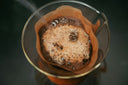
The pour-over coffee filter is making a comeback! It's especially popular among followers of the Third Wave Coffee movement (along with the Chemex) for brewing coffee. A filter basket, preferably made of glass or porcelain, is placed on top of a carafe, lined with a paper filter, and hot water is poured over the ground coffee. Important: Dampen the paper filter beforehand to remove any papery taste. This method celebrates a purist approach to coffee preparation, allowing you to focus entirely on the diverse aromas of coffee.
Here too, gravity is used to transform coffee into a taste sensation. Light and medium roasts are particularly well-suited to getting the most out of this brewing method. The difference to a pour-over filter is that the Chemex carafe is already shaped like a filter basket at the top and widens at the bottom. This is advantageous because the top end functions simultaneously as a filter basket and spout.
Also known as the Bialetti, it is traditionally used in Italy to brew fresh espresso. Water is heated and forced through a filter at the bottom, pressing it through the ground coffee, so that an aromatic "espresso fountain" flows into the pot. The entire pot sits on a hot stovetop, although electric stovetop espresso makers are also available today. Darker roasts are preferred, but medium roasts are also very well suited for this method.
Filter coffee machines are found in the vast majority of German households and offices. These machines automatically heat water and pour it through a hose system over the ground coffee. The coffee brews slowly and then, using gravity, passes through a filter into a carafe. This allows for quick and large-scale brewing of coffee.
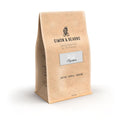
Our decaffeinated coffee from Colombia is truly suitable for any brewing method. Try it with a fully automatic coffee machine or, for on-the-go brewing, with an Aeropress. However you like it – the taste is, of course, 100% coffee, just almost caffeine-free. A residual amount of 0.1–0.3% caffeine is possible due to the natural decaffeination method.
Our decaffeinated coffee
While work is already underway on coffee beans that grow completely without caffeine, until then we use methods for decaffeination. Learn more about how this works and why we chose the sugarcane method.
der Kaffee aus Kolumbien (decaf) ist mein Favorit, wenn es um entkoffeinierten Kaffee geht und reiht sich als Filterkaffee gut in das Angebot dieser Rösterei ein. Ich trinke ihn nun schon länger und hoffe das er so im Programm bleibt. ☕
Schmeckt super gut!
Der beste entkoffeinierte Café, den ich je getrunken habe. Verwandte und Bekannte waren ebenfalls begeistert. Gerne weitere Alternativen für entkoffeinierten Café, um das Sortiment sinnvoll zu vergrößern. :)
Super Alternative wer generell entkoffeiniert trinken mag oder für den abendlichen Espresso darauf zurückgreifen mag.

Geschmacklich top ist der Kaffee etwas für alle Liebhaber, die gern mal einen Kaffee mehr trinken wollen ohne zittern zu müssen. Wärmstens zu empfehlen!